
According to census data collected by the Office for National Statistics in 2021, there are an estimated 1.5 million unoccupied properties in England alone, of which 1.3 million are vacant dwellings and around 150,000 second homes. If you fall into these statistics because you have bought an empty property, you own a holiday home that remains unlived in for much of the year or your company premises are undergoing a top-to-bottom renovation, securing your vacant property should be at the top of your to-do list.
Crime targeting unoccupied buildings and their surrounding land seems to be increasing year on year, costing businesses and homeowners more and more. Given the unattended nature of these assets, lawbreakers increasingly view them as a lucrative opportunity.
In this comprehensive guide, we’ll walk you through some of the risks involved and how to prepare for them. By applying the tips and principles shared by our security specialists, you will be able to take the necessary steps to protect your hard-earned investments.
Skip to:
- Why secure an empty property?
- How to go about securing a vacant property
- Security measures to consider
- Conclusion
Why secure an empty property?
It’s common knowledge that properties left unattended for months on end have the potential to become hotbeds for unwanted behaviour and even crime if you are unlucky. As such, an awareness of the possible threats can do you well; after all, with foresight, you will be able to evaluate the risks and mitigate them without too much trouble.
Theft and property fraud
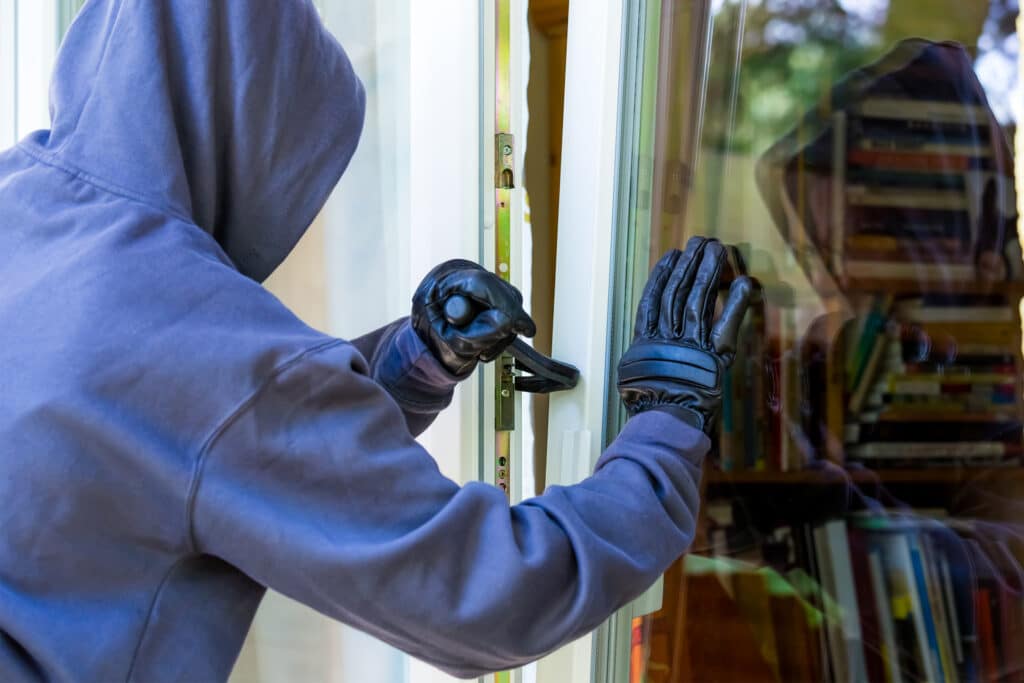
No one likes to dwell on the thought of their belongings being stolen, let alone their home. However, to secure your empty property it’s imperative that you prepare for the possibility. Whether perpetrated by opportunistic petty thieves or career criminals who undertake some degree of planning, individuals may wish to exploit your property’s value via physical and digital channels.
Theft is fairly straightforward to protect yourself against – with the use of traditional security measures and devices – whereas property fraud is slightly trickier to combat. Either way, you should put deterrents in place to keep criminals away from your office, home or holiday house to see that they don’t recce the property and decide to target it.
Vandalism and graffiti
Another issue likely to arise if you are leaving a site unoccupied and unobserved is vandalism and graffiti. These types of vandals are typically attracted to areas that are out of view, quiet or otherwise in a discreet location. While some might target rural dwellings, knowing police response times will be longer, others get a thrill out of the high-risk nature of hitting urban spots.
Squatters and trespassers
From urban explorers and delinquents to longer-term squatters, many types of trespassers could see your empty property as potential for entertainment or shelter. Consider looking at the space from their perspective: is there anything that could look interesting and fun? Is entry low effort? If so, you may want to step up your security.
As we mentioned in our previous blog about crime in Birmingham, security issues can vary between areas. But it doesn’t matter how safe your neighbourhood is if a would-be criminal has discerned that a building has been empty for months. Consequently, it’s worth noting that any vacant property could be vulnerable.
How to go about securing a vacant property
There are many facets to vacant property security, each designed to tackle differing degrees of risk and the various challenges we’ve laid out above. The most important thing to take away, though, is that taking action should start now – not after you’ve experienced a loss. While it is often easier said than done, particularly as we all live busy lives, you’ll find that many of the tips we divulge are easily implemented.
Understanding the risks
We’ve covered the primary risks that arise around empty buildings – theft, property fraud, trespassing and antisocial behaviours – but it’s also important to remember that these categories should be applied loosely as criminals could move between these distinctions.
For instance, a trespasser could pinpoint valuable assets once on your property with the intention of returning at a later date to carry out a planned robbery.
On top of this, it’s a good idea to take note of the specific items and belongings that are at risk, so you can lock them away or move them from sight. If your vacant property is an outbuilding on a farm housing expensive equipment, you may need to implement security measures tailored to farm yards. Other valuables might include:
- Electronics
- Fittings and furniture
- Vehicles, bicycles and trailers
- Tools and building equipment
- Roof tiles and other desirable materials
Identifying your weaknesses
After you have a good understanding of the threats posed and have acknowledged that your property might be at risk, the first step is to consider the areas that can be improved without too much effort or upheaval. If you are reading this guide, it’s likely that you are already taking proactive measures, but here are some simple changes that can make a world of difference.
- Keep valuables out of sight and locked away.
- Be cautious with your keys, always locking the property when you aren’t around and storing the keys appropriately.
- If you have contractors working on the building ensure that they are certified in their profession, have good reviews and are reputable.
- Trust your instincts if there is suspicious activity sighted around your vacant property and let others know – a local neighbourhood watch scheme is a good bet, or you could call the non-emergency police number 101 if uncertain.
- Don’t allow criminal activity to go unreported – the police may be able to track down any stolen items and recover them for you, and their presence may deter future crimes from occurring.
Setting aside a budget
When you know the extent of the requirements to secure the empty property, you can begin to do your research to draw up a budget. Of course, this will vary wildly depending on the measures implemented; the cost of solutions like hiring security guards or improving perimeter fencing can be offset against reduced insurance premiums, risk of loss and peace of mind.
You can get a realistic idea of how much your safeguards will cost if you make a few enquiries and compare quotes.
Security measures to consider
With the preliminaries covered, you can now identify which security measures are appropriate for your circumstances. Here are 8 powerful deterrents that you should weigh up when securing your property.
1) Perimeter security
By far one of the most effective ways to prevent crime from happening on your plot is by maintaining a well-secured perimeter. This might involve physical barriers such as a tall wall, fencing or gates blocking off access. Depending on the nature of the property, this might be a permanent feature that, whilst providing protection, can also lend a touch of refinement ideal for luxury abodes or holiday homes.
If you’re working with a decent budget, you may want to integrate smart systems with such a barrier, so that access can be granted remotely and conveniently. Alternatively, you could look to traditional manned security to provide an edge as, after all, nothing can beat a physical deterrent.
Perimeter guards
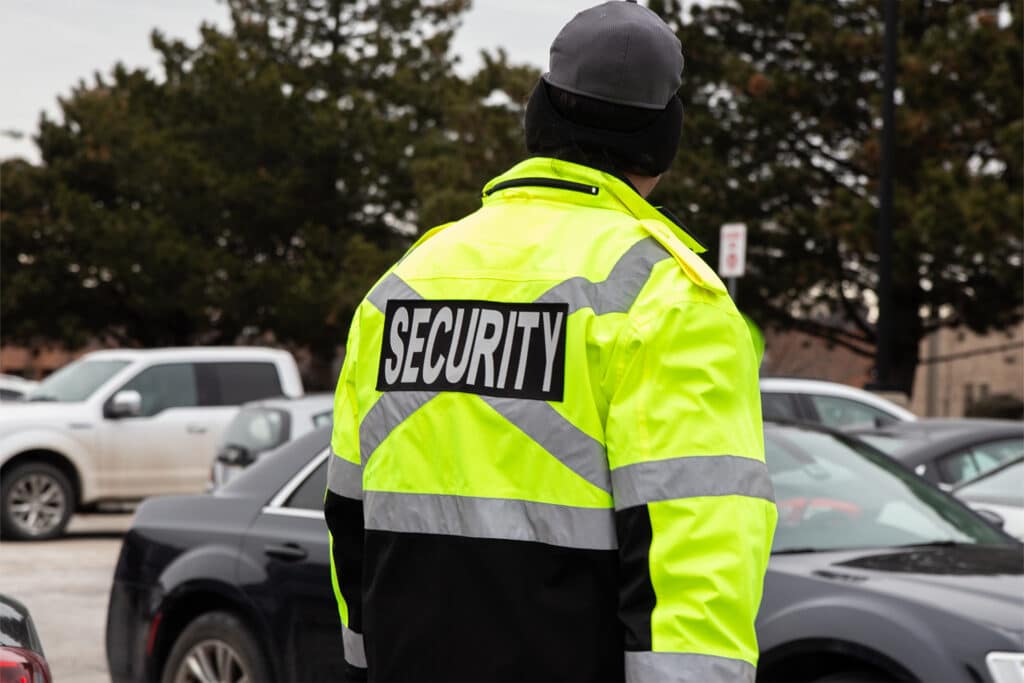
When it comes to manned security, you have a couple of options – one of the most robust being static security guards who you can station strategically along the perimeter and at entry points. These professionals are trained to guard and monitor your land, admit authorised personnel onto the site, deal with trespassers appropriately and liaise with emergency services if necessary.
Their presence is not only effective at keeping would-be vandals far away from the vacant property but their ability to deploy a rapid response in the event of an incident means that the likelihood of property damage is greatly reduced.
Mobile patrols
Among the many types of security guards are those who conduct mobile patrols. With similar responsibilities to static guards, mobile patrols take their benefits to the next level by offering additional flexibility and wider coverage. More suitable for estates, business premises or a set of vacant properties, they are often equipped with SIA-licenced vehicles allowing them to conduct thorough patrols of the property lines in good time. Far from a bolt-on solution, their movements and checks can be tailored to your needs.
From routine walks along the perimeters to conducting investigations of damage, they’ll report any findings back to you and keep detailed records of any incidents that do occur. The major advantage to incorporating mobile guards into your security plan is that they provide sweeping protection that covers all bases and complete peace of mind.
2) Security dog presence
Guard dogs may conjure the image of an English Mastiff on a chain, but their implementation far exceeds this when deployed alongside a seasoned dog handler. Canines are a uniquely off-putting deterrent for trespassers and thanks to their keen senses, they can pick up on disturbances well before a human can.
As you might expect, guard dogs are a wonderful supplement to the security measures we’ve discussed thus far, working diligently alongside static guards or patrols.
3) CCTV surveillance
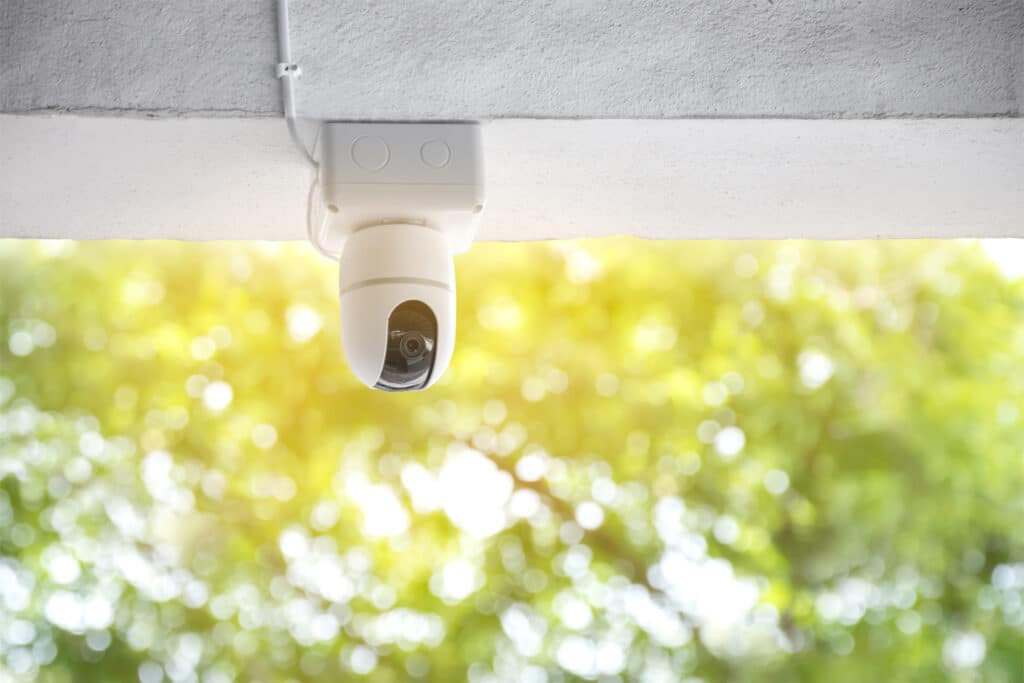
Many criminals will view an unwatched property as easy pickings for theft, vandalism and squatting – with CCTV coverage you can prove them wrong. With a camera in place, you’ll benefit from 24/7 peace of mind knowing that you can prevent wrongdoing, improve overall safety and be able to provide footage in court if anything does occur.
In remote areas or instances requiring a temporary solution, mobile CCTV towers are an option. More effective than your regular types of CCTV camera, these mounted surveillance devices are designed to pick up suspicious activity from miles away whilst instilling that unmistakable sense of being watched.
Fitted with night-vision capabilities, powerful lenses and security lights, they’re also ideal for catching organised crime in the act. A standout feature is that they’re easily moved, so you can relocate them around the site as circumstances change.
4) Upgrade external locks and doors
If you want the extra assurance that unwanted individuals can’t get into your empty property, a good place to start is the locks. Invest in British Standard locks and extra padlocks if required – these will slow down an intruder and likely dissuade them from trying to enter. Remember criminals prefer the path of least resistance, so if it looks awkward to enter, they will try elsewhere.
5) Smart home devices
Nowadays state-of-the-art security technology is abundant. Biometric locks, camouflaged security cameras, motion sensor garden alarms, smart locks and other digitally powered access control features are ideal for vacant second homes or holiday retreats. While on the high end of the price spectrum, they combine convenience and protection seamlessly.
6) Install physical barriers
As well as having a visible security presence, you may benefit from installing physical barriers around the building. Think about installing proper security fencing or temporary concrete barriers to keep people out and from potentially harming themselves. If there are already natural barriers such as thorny shrubs and plants, consider reinforcing them with fencing or expanding them. Adding railings atop a wall is another easy way to compound the difficulty of scaling it.
7) Motion sensor lighting
Motion sensor lights are a surefire way to ensure that offenders are visible if they attempt to get near to your property. This not only functions as a deterrent, but if you need to report an individual to the police, security guards have a higher chance of getting a good look at them.
8) Alarm systems
Similar to security lights, alarm systems are designed to increase the likelihood of intruders being caught, thus, discouraging them from returning in future. With rapidly improving technology, there are so many models on the market, giving you the freedom to choose those that work best in your circumstances. From smart alarm systems that allow you to react remotely to keyholder response monitoring, you can ensure that the alarm doesn’t go unanswered.
Additional safeguarding measures
Unoccupied house insurance
If your property is going to remain empty for over 60 days regular insurance just won’t cut it. Instead of opting for standard home insurance, you will have to choose a specialist vacant property insurance policy that suits the timeframe you are on. Many providers offer flexible plans, giving you the option to extend if necessary.
Protecting against property fraud
Joining the HM Land Registry’s Property Alert Service is a smart move in a day and age when illicit sales and property fraud are spiralling. Not only is this service free to sign up to, but it is easy to do. Simply, navigate to the relevant page on the Government website, then create an account to receive email notifications alerting you to suspicious activity flagged as possibly fraudulent. With a 26% increase in users in the last year, its popularity speaks to the peace of mind it proffers homeowners.
Redirecting your post
One of the most obvious signs of vacancy is a build-up of old postage. Therefore, a brilliant way of disguising this fact is to organise for your correspondence to be redirected to a temporary address. On top of your ability to maintain the guise of occupancy, it keeps you safe by ensuring that your personal information remains in the right hands.
Checking on your property
Semi-regular visits or enrolling in a neighbourhood watch scheme is a sensible way of keeping tabs on the status of your property and the area more widely. From maintenance requirements to perimeter weaknesses, it’s always worth nipping issues in the bud before they become real problems.
Social media savviness
Finally, it’s important to not underestimate the impact of your digital footprint on security, particularly if you are a high-income property owner. For example, if you are consistently posting your exact whereabouts, criminals can use your travel plans to work out when your property is unoccupied and, thus, vulnerable. Therefore, if you have a large social media following, it’s best to delay photos and location updates, so your movements are masked.
Securing a vacant property with confidence
Armed with all the information we provided, fortifying your vacant property should be easier than ever. Whether you intend to implement a variety of strategies or simply invest in one powerful deterrent, knowing that you have taken the appropriate action will purge any sense of unease from your mind.
If you wish to speak to an accredited security provider to learn more or ask questions about how best to implement vacant property protection, don’t hesitate to contact our friendly team.